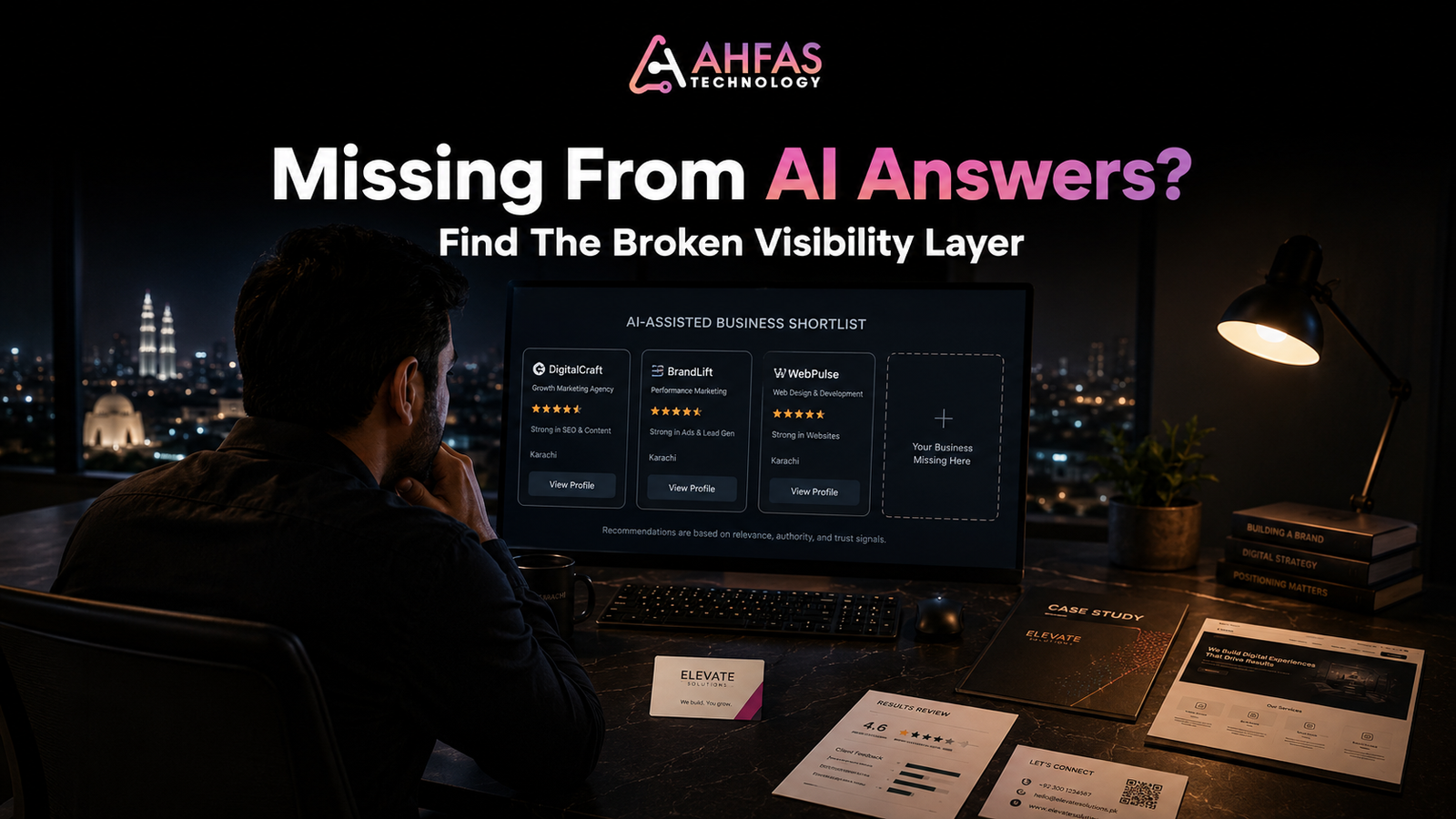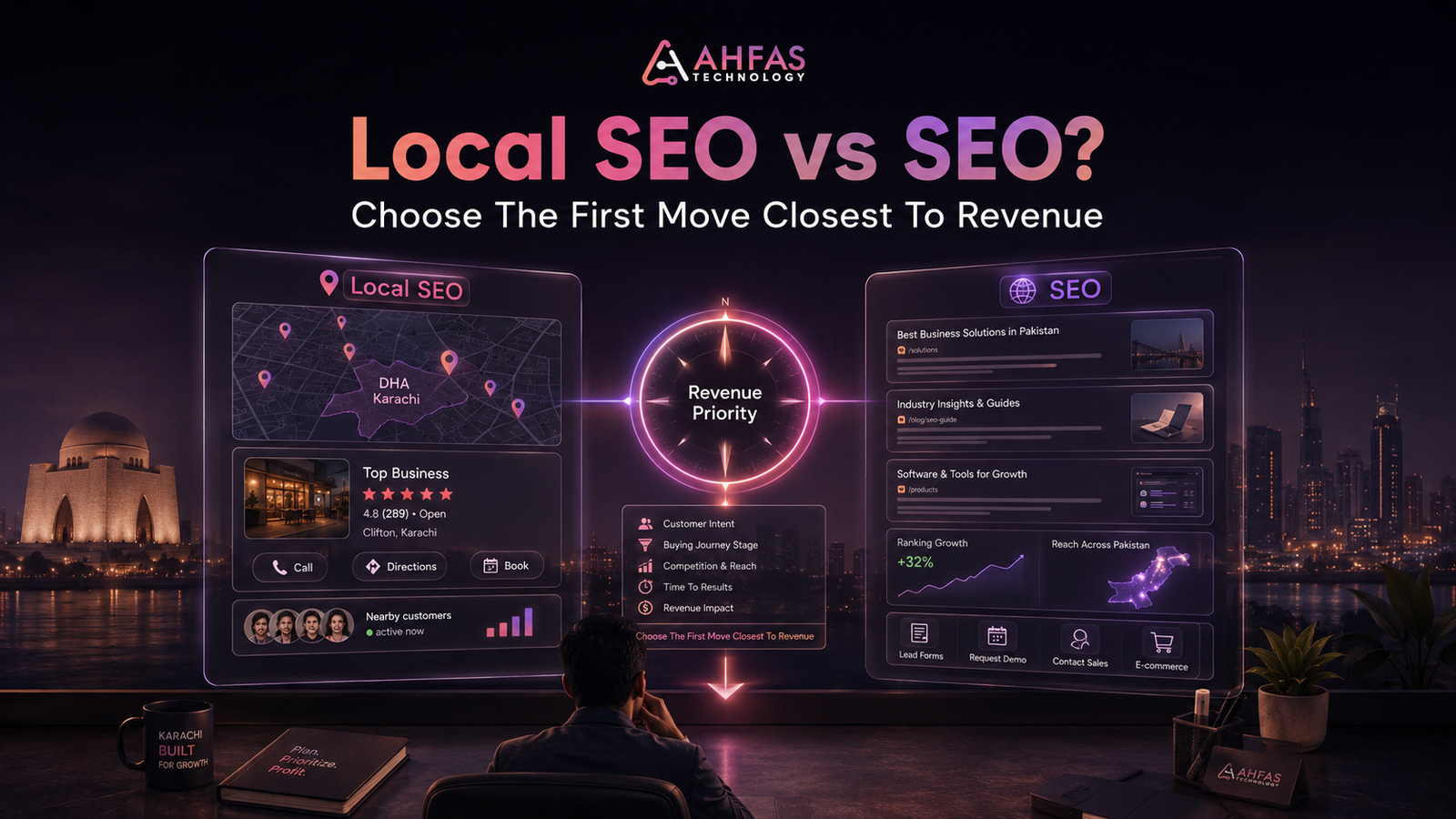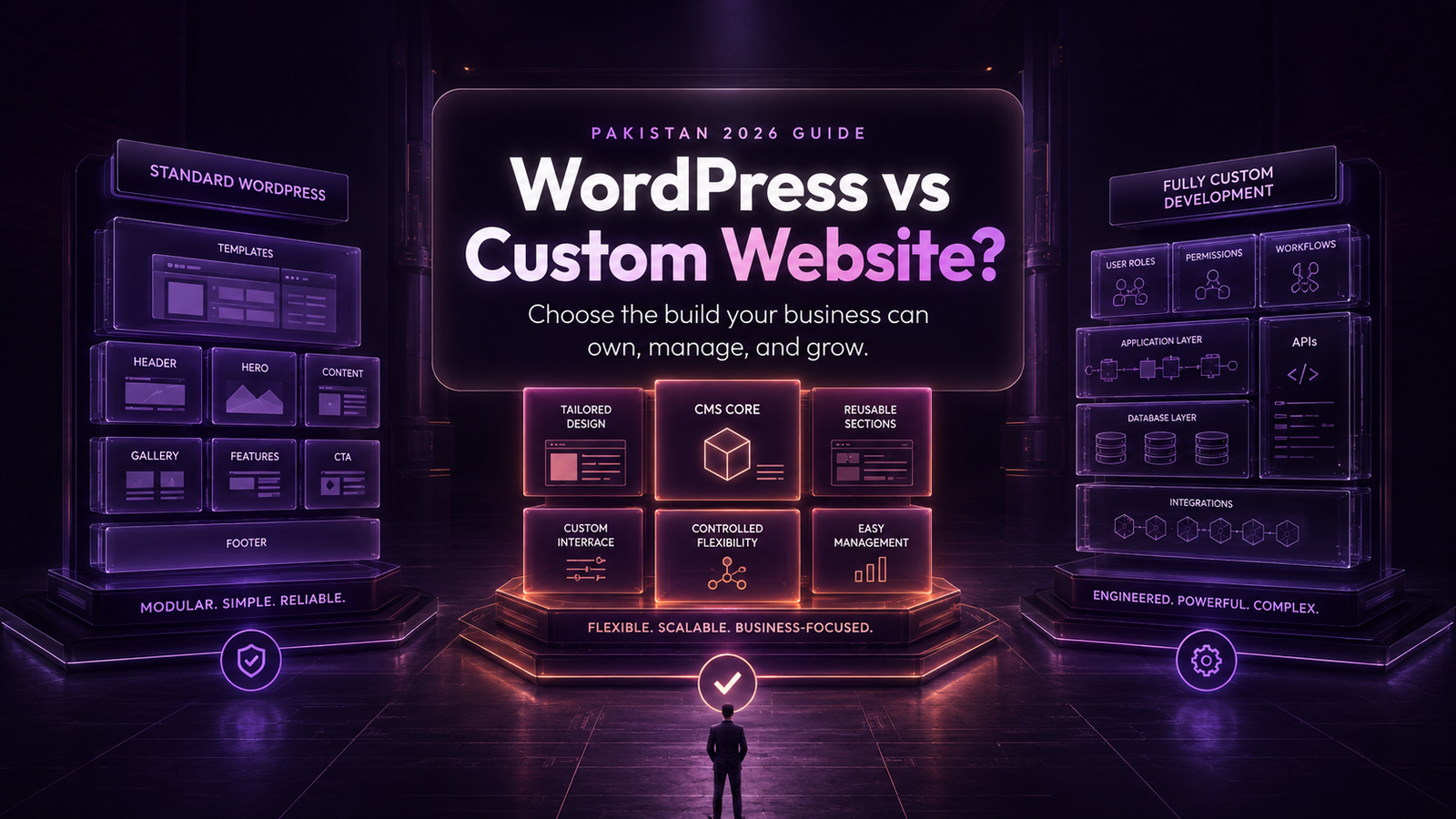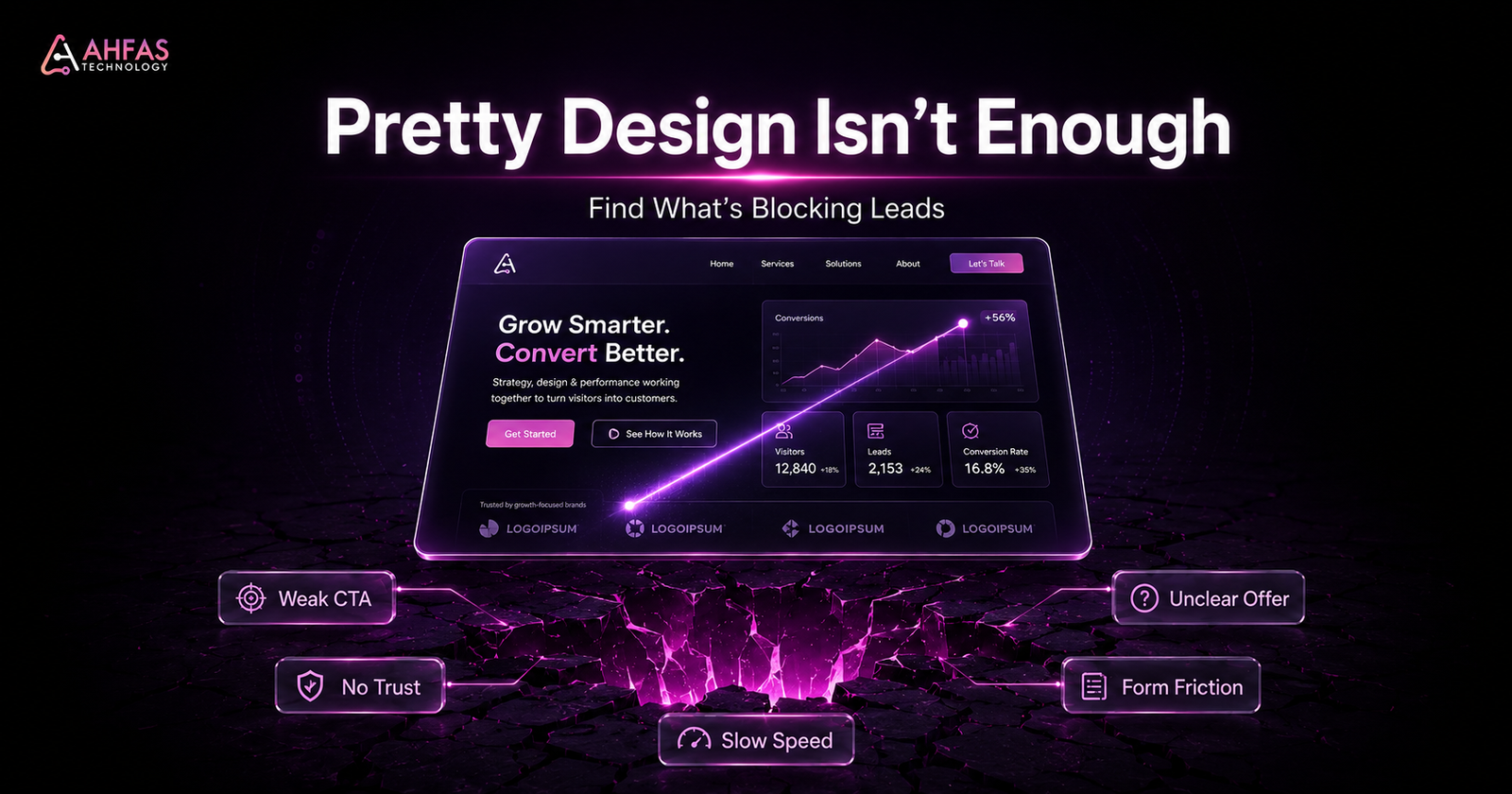
Your website is live, but leads are slow.
Your competitors appear above you on Google.
Your ads feel expensive.
Your SEO feels too slow.
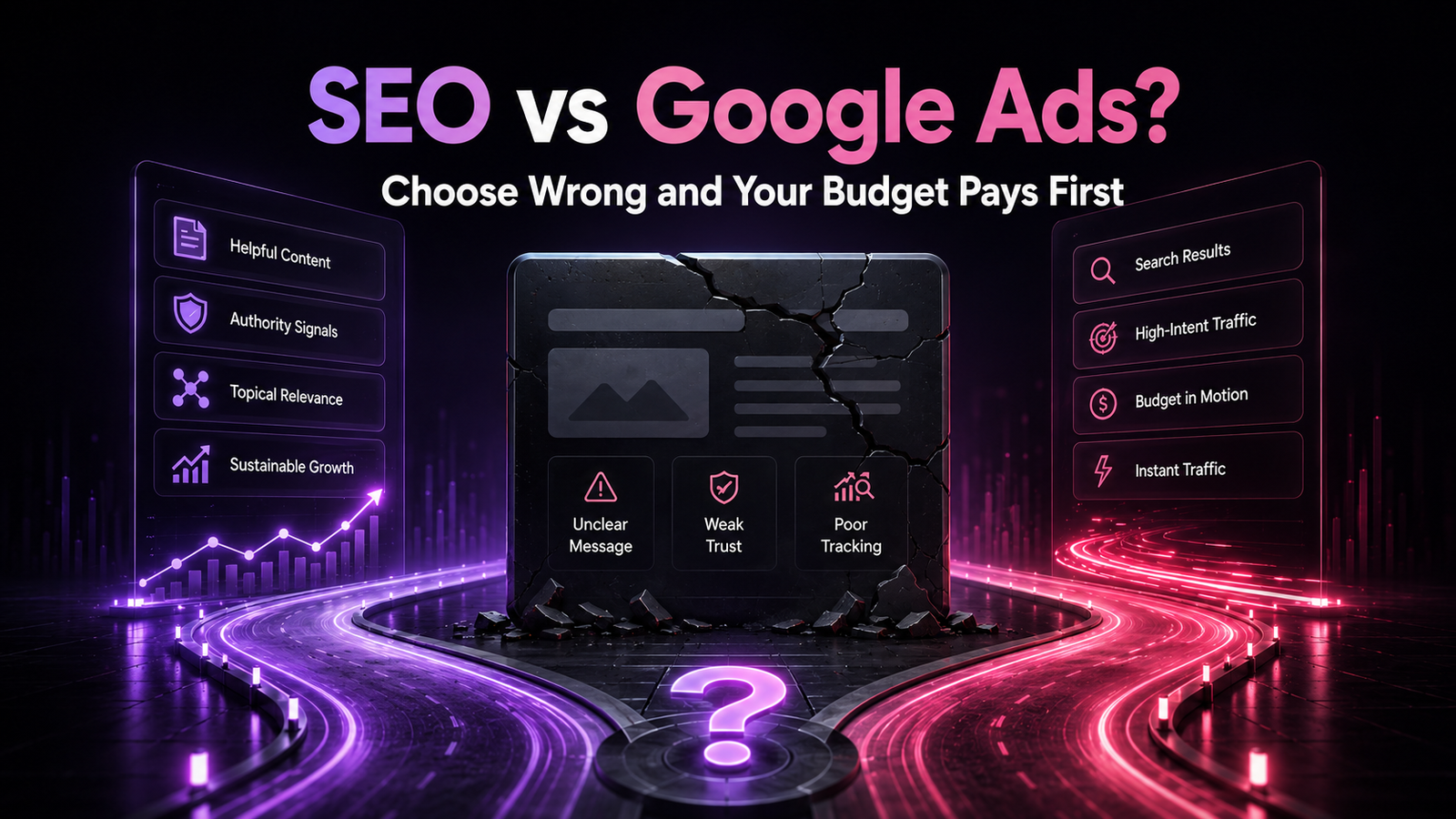
And now the real question is sitting in front of you: SEO vs Google Ads for small business, which one should you choose first?
Here is the direct answer. Choose Google Ads first if your business needs leads quickly and your website is ready to convert. Choose SEO first if your business needs long-term visibility, trust, and lower dependence on paid clicks. Choose both if you have the budget to test demand now while building organic growth for later.
The mistake is not choosing SEO or ads. The mistake is choosing either one before diagnosing what is actually broken.
Key Takeaways
- Google Ads is better for speed, testing, and short-term lead generation.
- SEO is better for long-term visibility, trust, and organic traffic.
- A weak website can waste both SEO effort and ad budget.
- The best first step depends on urgency, budget, competition, tracking, and page quality.
What Is the Real Problem?
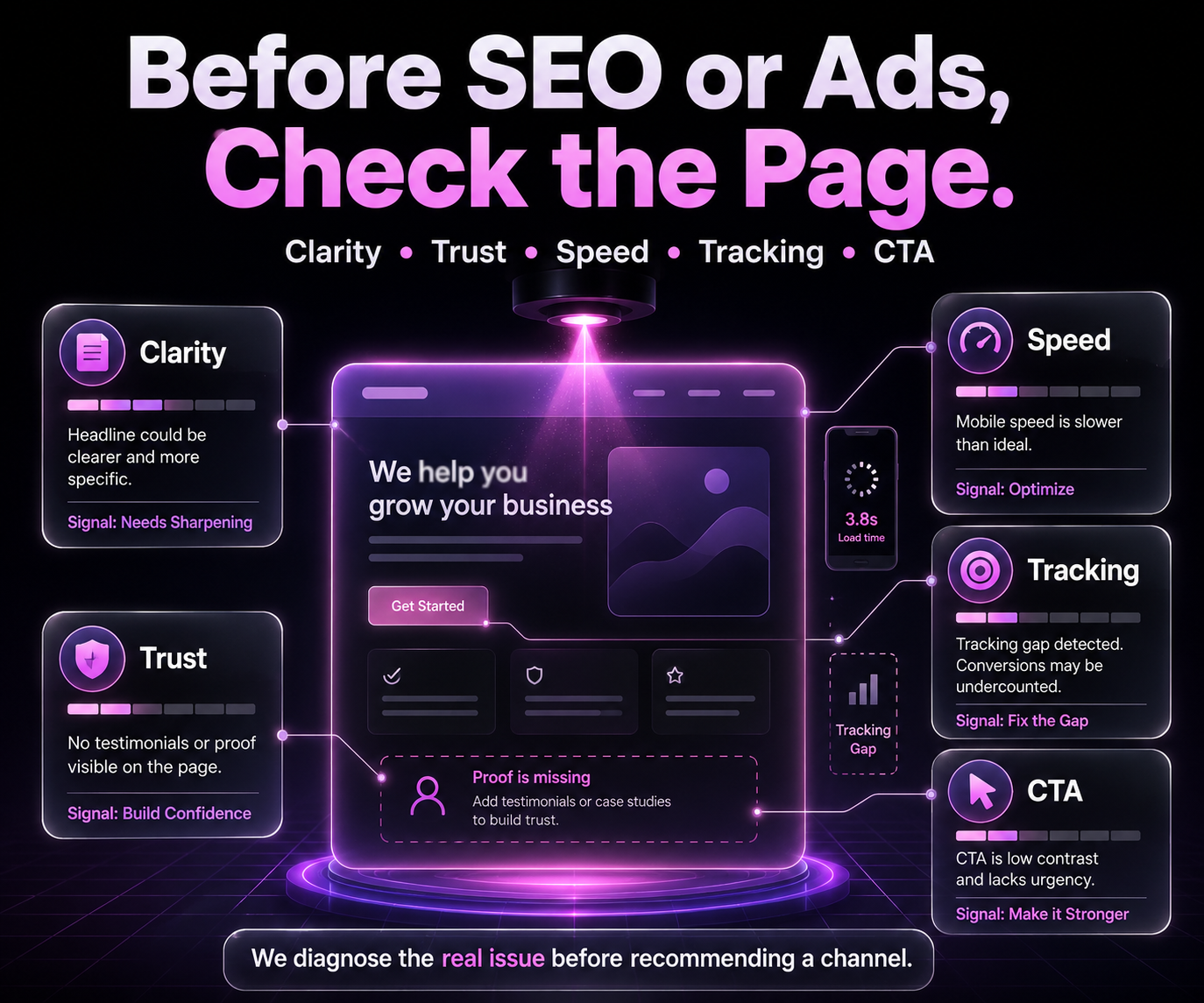
Most small businesses do not have a traffic problem first.
They have a clarity problem.
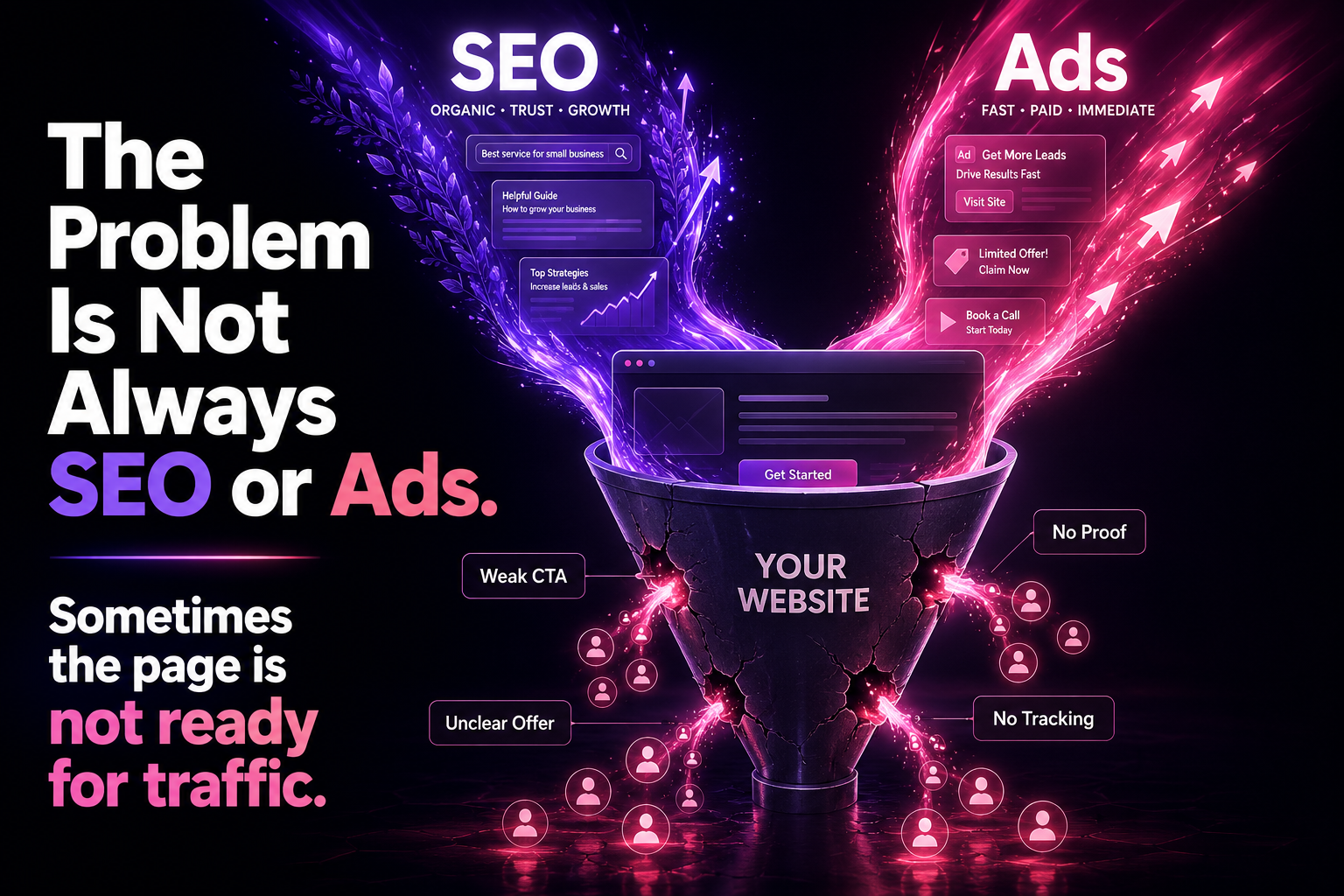
The service page does not explain the offer clearly. The call to action is weak. The website loads slowly on mobile. There is no proof, no strong reason to trust the business, and no tracking to show which channel is actually producing leads.
So when a business asks, “Should we invest in SEO or Google Ads first?” the better diagnostic question is:
Is the business ready to turn visitors into inquiries?
Because if the website cannot convert, SEO will bring visitors who leave quietly, and Google Ads will make that problem more expensive.
This is why a strong digital marketing agency in Karachi should not only talk about traffic. It should look at visibility, trust, landing pages, service clarity, tracking, and lead quality together.
What Is SEO for Small Business?
SEO, or search engine optimization, helps your website appear in unpaid Google results when people search for your services.
For a small business, SEO usually includes:
- Keyword Research
- Service Page Improvement
- Technical Seo
- Content Writing
- Internal Linking
- Google Business Profile Improvement
- Local Seo
- Website Speed And Mobile Fixes
- Helpful Blog Content
- Trust Signals And Review Support
Google’s own SEO documentation explains that SEO helps search engines crawl, index, and understand content, but the content still needs to be useful for people first. That matters because modern SEO is not about tricking Google. It is about making the right page useful enough to deserve visibility. Source: Google Search Central
SEO is usually the better first choice when customers need time to compare, research, and trust the business before contacting it.
That applies to many clinics, consultants, ecommerce stores, real estate businesses, home service companies, and local service providers.
What Are Google Ads for Small Business?
Google Ads allows a business to appear in paid placements on Google Search and other Google surfaces. A business chooses campaign goals, targeting, budget, keywords, and landing pages, then pays based on the campaign type and user actions.
Google Ads is useful because it can create visibility faster than SEO. If the campaign is set up properly, a business can test which keywords, offers, locations, and landing pages produce inquiries.
Google’s official Google Ads resources explain that ads can help businesses drive calls, website visits, store visits, leads, and sales. Source: Google Ads for Business
But speed does not mean guaranteed profit.
If the landing page is weak, the offer is unclear, or conversion tracking is missing, Google Ads can bring clicks without enough leads. This is where many small businesses lose money and then blame the platform.
SEO vs Google Ads for Small Business: Quick Comparison
| Factor | SEO | Google Ads | What It Means |
| Speed | Slower to build | Faster to launch | Ads are better for urgent visibility |
| Cost | Investment in content, pages, SEO work | Ongoing ad spend plus management | Ads stop when budget stops |
| Trust | Strong for organic authority | Depends on landing page and offer | SEO can build long-term credibility |
| Testing | Slower feedback | Faster keyword and offer testing | Ads can reveal what converts |
| Tracking | Needs analytics and Search Console | Needs conversion tracking | Both need clean measurement |
| Local leads | Strong with Google Business Profile | Strong for high-intent searches | Local businesses often need both |
| Long-term ROI | Can compound over time | Easier to measure quickly | Best choice depends on timeline |
Which One Gets Leads Faster?
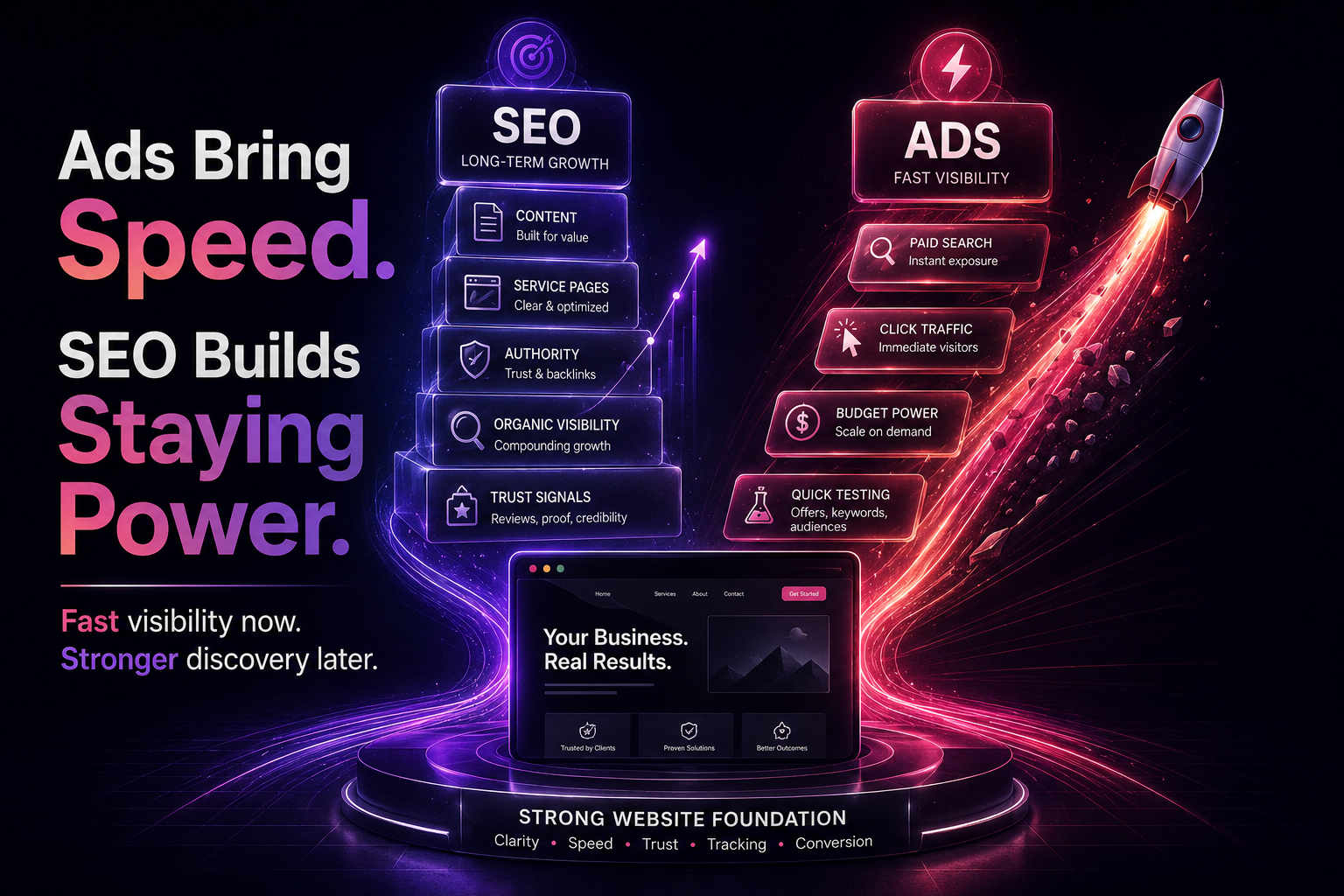
Google Ads usually gets leads faster than SEO.
That does not mean it is always the better first move. It means it is better when the business has a clear offer, a strong landing page, a real budget, and conversion tracking in place.
Google Ads is useful for search terms with urgent intent, such as:
- emergency repair service
- dentist near me
- website development company near me
- real estate consultant in Karachi
- best clinic for appointment
- same-day service provider
These searches often come from people who are closer to action.
If a business needs short-term lead generation, Google Ads can help test demand faster than SEO. Google’s conversion tracking resources also explain that businesses can measure actions such as calls, purchases, sign-ups, and website conversions after ad interactions. Source: Google Ads Conversion Tracking
That tracking is not optional. Without it, the business is guessing.
Which One Builds Better Long-Term Value?
SEO usually builds better long-term value.
Once a page ranks for the right search intent, it can keep bringing organic traffic without paying for every click. That is why SEO is important for service pages, location pages, helpful blogs, and local SEO for small business.
SEO also supports trust. Many customers do not contact the first business they see. They compare. They read. They check reviews. They visit the website again. They ask themselves, “Does this business look reliable?”
A strong SEO page helps answer that question before the customer contacts you.
For small businesses in Karachi and Pakistan, this is especially important because buyers often want proof before they trust a service provider. A clean website, clear service pages, helpful content, visible contact details, and strong local relevance can make the business feel more credible.
This is where SEO services in Karachi should support more than rankings. They should improve the page so it is actually worth ranking.
What About AI Overviews and 2026 SEO?
Search is changing. People are not only scanning blue links anymore. They are also seeing AI-generated summaries, comparison answers, and direct explanations inside search results.
A 2026 research paper analyzing Google Search, Gemini, and AI Overviews found that AI Overviews were generated for 51.5% of representative real-user queries in the study. Source: arXiv 2026 study
That does not mean every business should chase AI shortcuts.
It means content must be clearer, more useful, more structured, and easier to understand.
Google’s guide for generative AI features says foundational SEO still matters. Pages need to be technically accessible, indexed, useful, and eligible for Google Search features. Source: Google AI Optimization Guide
For AHFAS-style content, this means every blog should answer the question early, explain the decision clearly, use tables where helpful, include practical checklists, and avoid vague agency language.
The Real Decision: What Should Be Fixed First?
Use this simple diagnostic framework before choosing SEO or Google Ads.
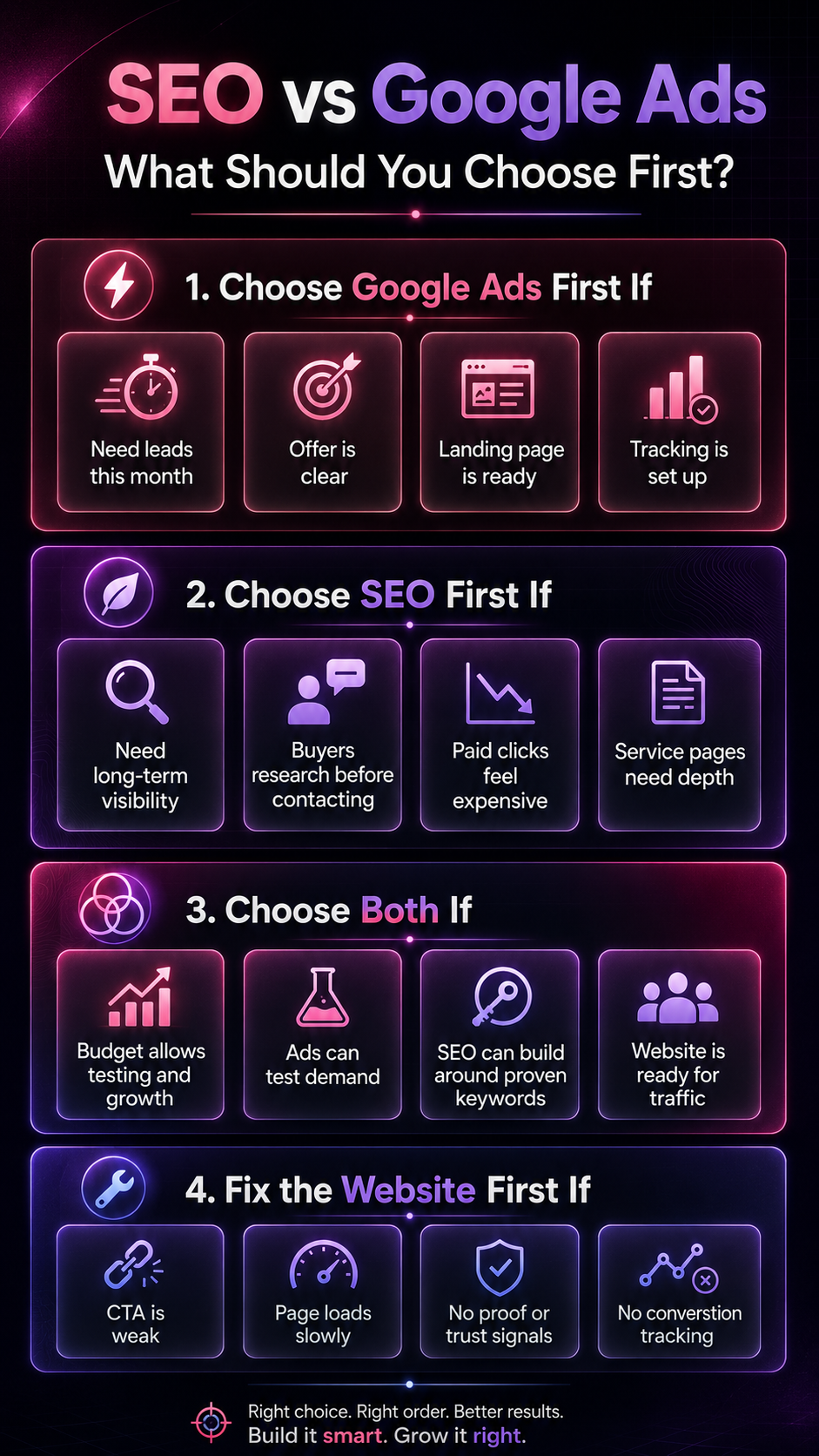
Choose Google Ads first if:
- You need leads this month.
- Your landing page is clear and mobile-friendly.
- Your offer is easy to understand.
- You have budget to test.
- You can track calls, forms, and WhatsApp clicks.
- Your service has urgent buying intent.
Google Ads works best when the business already knows what it is selling, who it wants to reach, and what action the visitor should take.
Choose SEO first if:
- You want long-term visibility.
- Your customers research before buying.
- Your industry needs trust and education.
- Paid clicks are too expensive.
- Your website needs stronger service pages.
- You want to reduce dependence on ads.
SEO works best when the business is ready to build authority, answer customer questions, and create pages that deserve to rank.
Choose both if:
- You have enough budget.
- You want leads now and growth later.
- Ads can test which keywords convert.
- SEO can target those proven keywords long-term.
- Your website is ready for traffic.
- You want a complete small business digital marketing strategy.
This is often the strongest plan. Use Google Ads for speed. Use SEO for staying power.
What Most Small Businesses Get Wrong
The biggest mistake is spending money before fixing the basics.
A business runs ads, but the landing page has no proof.
A business starts SEO, but the service page is thin.
A business gets traffic, but the call to action is buried.
A business receives views on Google Business Profile, but no one calls because the profile looks incomplete.
A business posts blogs, but they do not support service pages.
This is why more traffic is not always the answer. Sometimes the business needs better website development services before it needs more visitors.
A weak website can damage both channels. SEO struggles because the page does not deserve to rank. Google Ads struggles because paid visitors do not trust the page enough to act.
Do This, Not That
| Do This | Not That |
| Fix service page clarity first | Send paid traffic to a confusing page |
| Track calls, forms, and WhatsApp clicks | Judge ads only by clicks |
| Build SEO around real search intent | Publish random blogs for word count |
| Use ads to test keywords | Spend months guessing what converts |
| Improve trust signals | Expect traffic to fix weak credibility |
| Compare cost per lead with sales value | Celebrate cheap traffic with no inquiries |
This is the difference between activity and strategy.
SEO vs Google Ads ROI: How Should You Measure It?
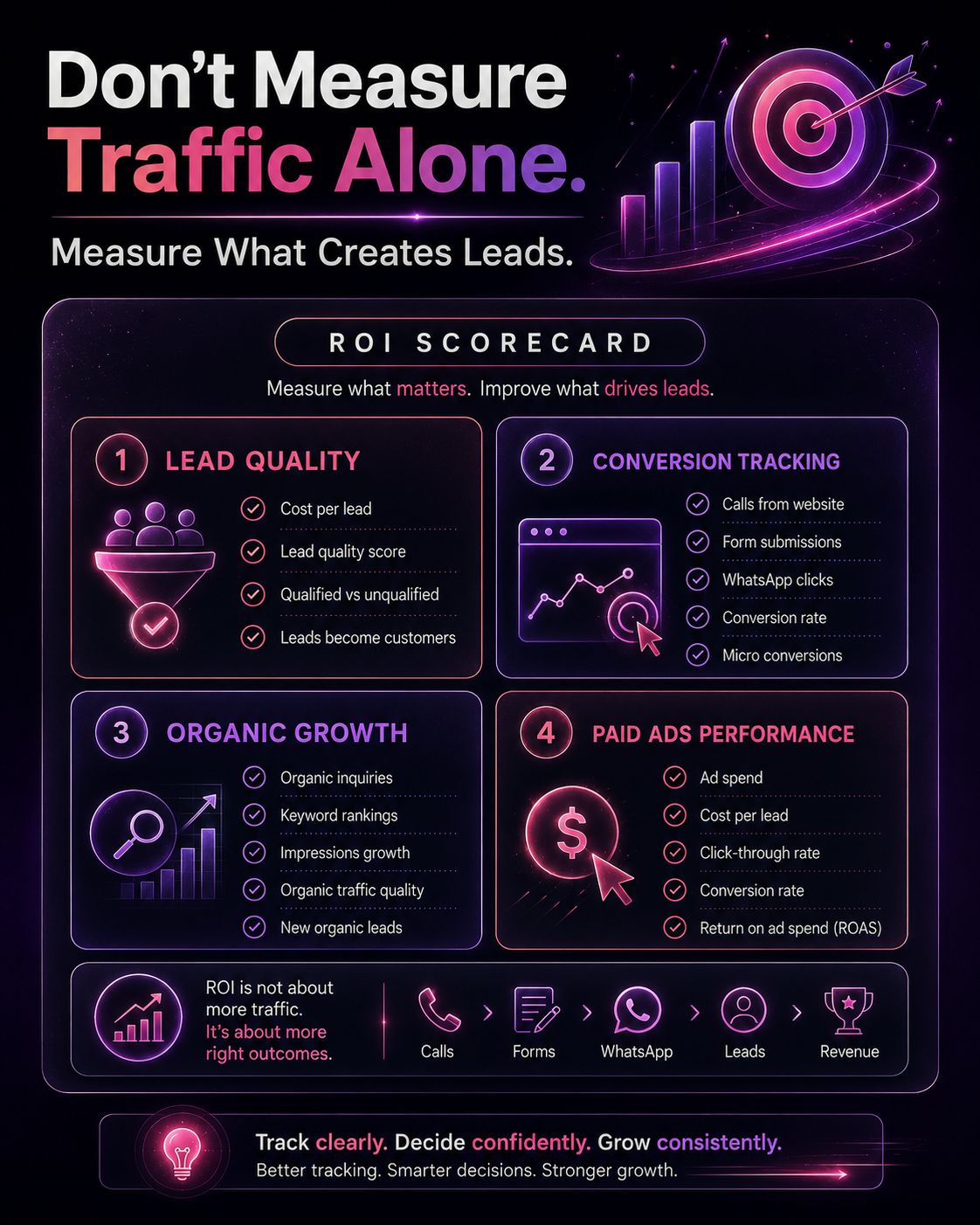
ROI should not be measured by traffic alone.
A small business should measure:
- Cost Per Lead
- Lead Quality
- Conversion Rate
- Customer Acquisition Cost
- Return On Ad Spend
- Organic Inquiries
- Ranking Growth
- Calls From Google Business Profile
- Form Submissions
- Whatsapp Clicks
- Sales Value From Each Channel
Google Ads ROI is often easier to measure quickly because the platform shows spend, clicks, conversions, and campaign data. SEO ROI usually takes longer because it builds through rankings, content, trust, and organic visibility.
But both channels need proper tracking.
Google Analytics 4, Google Search Console, Google Tag Manager, and Google Ads conversion tracking can help connect traffic with real business actions.
Without this setup, a business may know that people visited the website, but not whether those visits created inquiries.
Local SEO vs Google Ads: What Works Better for Local Businesses?
For local businesses, the answer is often both.
Local SEO helps with Google Business Profile, map visibility, reviews, location pages, and organic trust.
Google Ads helps when people search with immediate buying intent.
For example, a customer searching “urgent AC repair near me” may click an ad because the need is immediate. A customer searching “best AC service company in Karachi” may compare organic results, reviews, and websites before calling.
That means Google Ads can catch urgent demand, while local SEO builds trust across the full search journey.
For Karachi-based businesses, this matters because customers often compare several providers before choosing one. The business that looks clearer, more trustworthy, and easier to contact usually has the advantage.
A Practical 90-Day Plan
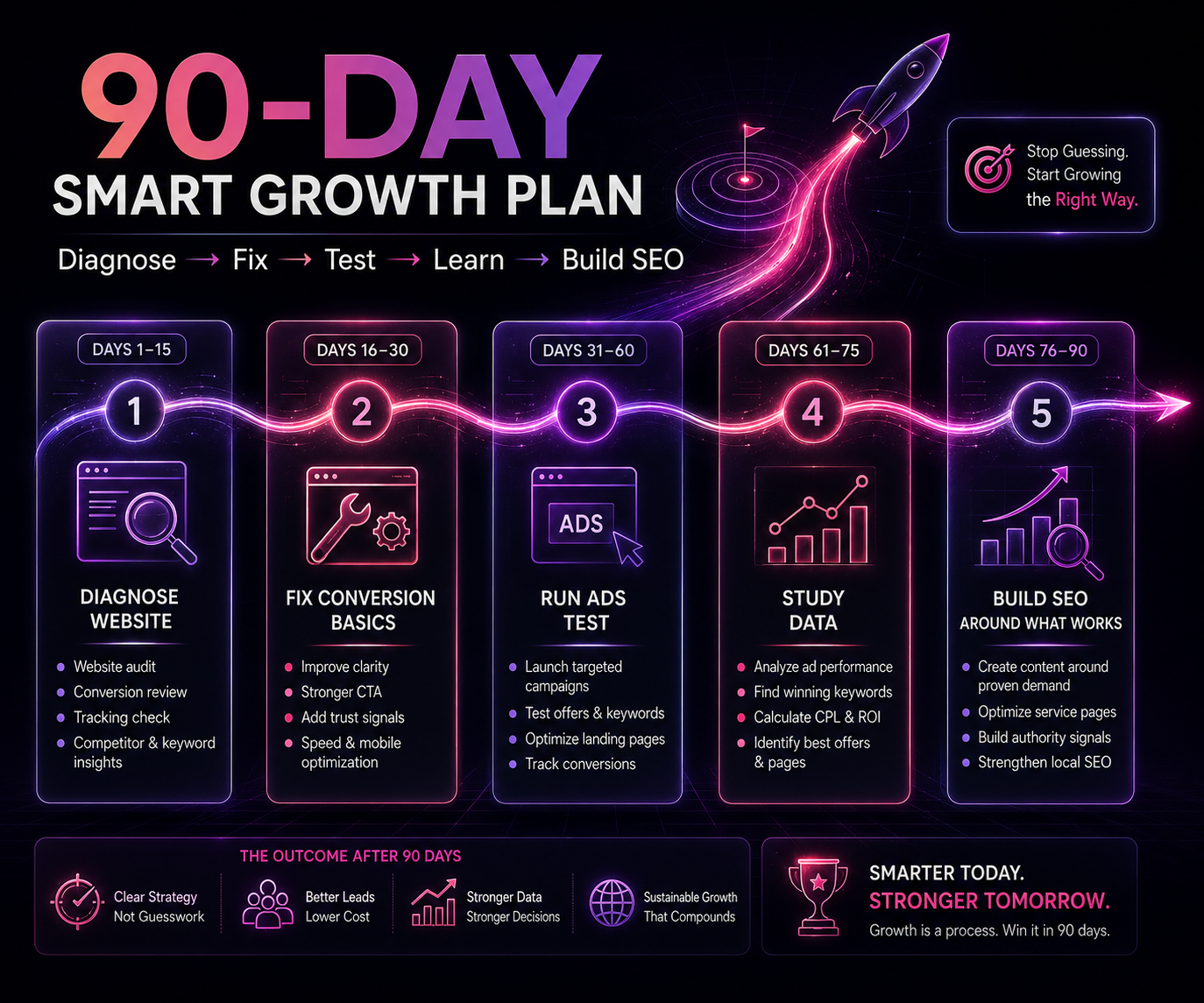
If a business is unsure where to start, this plan keeps the decision grounded.
Days 1 to 15: Diagnose the Website
Check service pages, mobile speed, CTAs, contact options, trust signals, page structure, and tracking.
Days 16 to 30: Fix Conversion Basics
Improve the landing page, add proof, make the offer clearer, and set up conversion tracking.
Days 31 to 60: Run a Small Google Ads Test
Test high-intent keywords, locations, ad copy, and landing pages. Watch cost per lead and lead quality.
Days 61 to 75: Study the Data
Identify which services, keywords, and messages produce serious inquiries.
Days 76 to 90: Build SEO Around What Works
Create or improve service pages, supporting blogs, internal links, FAQs, and local content based on proven demand.
This approach protects the budget. It also helps the business stop guessing.
When Should You Contact a Digital Growth Team?
A business should get expert help when it cannot clearly answer these questions:
- Why is the website getting traffic but no leads?
- Which service pages should be improved first?
- Are Google Ads too expensive, or is the landing page weak?
- Is SEO slow because of competition, content, or technical problems?
- Are calls, forms, and WhatsApp clicks being tracked?
- Should the business fix SEO, ads, website, branding, or content first?
That is the kind of diagnosis that prevents wasted spending.
A service provider should not only say, “Run ads” or “Do SEO.” It should explain what is broken, what to fix first, and how each channel supports business growth.
Conclusion
The choice between SEO vs Google Ads for small business is not about picking the trendiest channel. It is about choosing the right first move.
Choose Google Ads if the business needs leads quickly, has a clear offer, and can track conversions. Choose SEO if the business wants long-term visibility, trust, and organic growth. Choose both when the business has enough budget and wants short-term demand with long-term stability.
But before spending on either, fix the website, clarify the offer, strengthen trust signals, and set up proper tracking.
For a practical growth audit, contact AHFAS Technology at +92-300-9881329 or info@ahfastechnology.com.
Disclaimer: SEO and Google Ads results vary based on industry, location, competition, website quality, budget, tracking setup, and offer strength. SEO usually takes time to build sustainable visibility, while Google Ads can generate faster traffic but requires ongoing budget and proper campaign management.
FAQs
1. What is the difference between SEO and Google Ads?
SEO helps a website appear in organic search results over time. Google Ads helps a business appear in paid placements faster by using campaign budget.
2. SEO or Google Ads for small business: which should come first?
Choose Google Ads first if leads are urgent and the landing page is ready. Choose SEO first if the goal is long-term visibility, trust, and organic growth.
3. Is SEO better than Google Ads for small business?
SEO is better for long-term traffic and authority. Google Ads is better for quick testing and faster visibility. The better option depends on the business stage.
4. Is Google Ads better than SEO for small business leads?
Google Ads can generate leads faster, but only when targeting, budget, landing page quality, and conversion tracking are set up properly.
5. What is organic traffic vs paid traffic?
Organic traffic comes from unpaid search results. Paid traffic comes from ads. Organic traffic takes longer to build, while paid traffic usually starts faster.
6. How long does SEO take for small business?
SEO often takes a few months to show meaningful progress, depending on competition, website quality, content depth, technical health, and local authority.
7. How fast do Google Ads work?
Google Ads can begin sending traffic soon after launch. Real performance depends on the offer, keywords, budget, landing page, and tracking setup.
8. Can small businesses use SEO and Google Ads together?
Yes. Google Ads can test demand quickly, while SEO can build long-term visibility around proven keywords, services, and customer questions.
9. What is better for local business, local SEO or Google Ads?
Local SEO is better for map visibility, reviews, and long-term trust. Google Ads is useful for urgent searches and faster local lead generation.
10. Can AHFAS Technology help decide what to fix first?
Yes. AHFAS Technology can review the website, SEO, ads readiness, tracking, content, and service pages to recommend the right first move.