You land on a website.
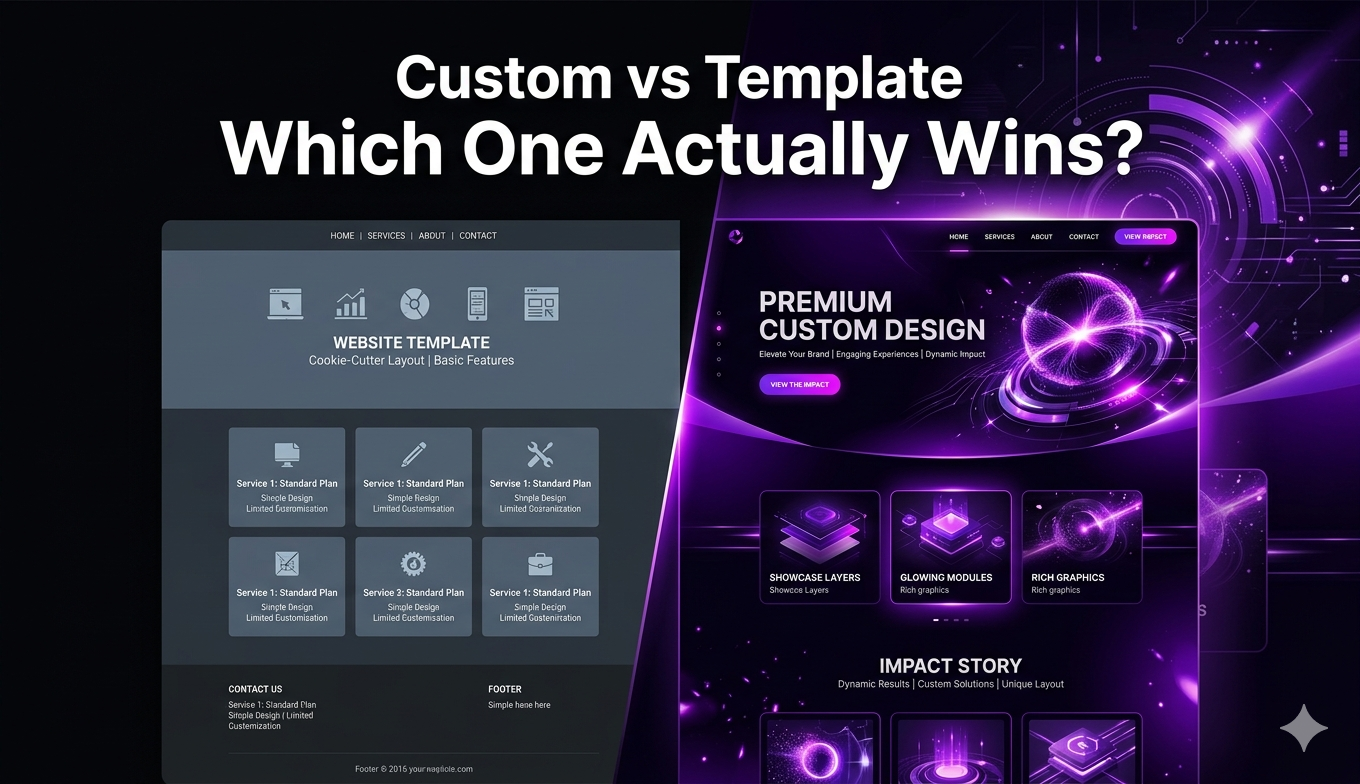
Everything feels… predictable. Same layout. Same fonts. Same sections you’ve seen a hundred times. You scroll, but nothing pulls you in. You leave in seconds.
Now imagine the opposite.
A site where the background moves subtly. The layout feels intentional. Every section tells a story. You don’t just scroll, you explore.
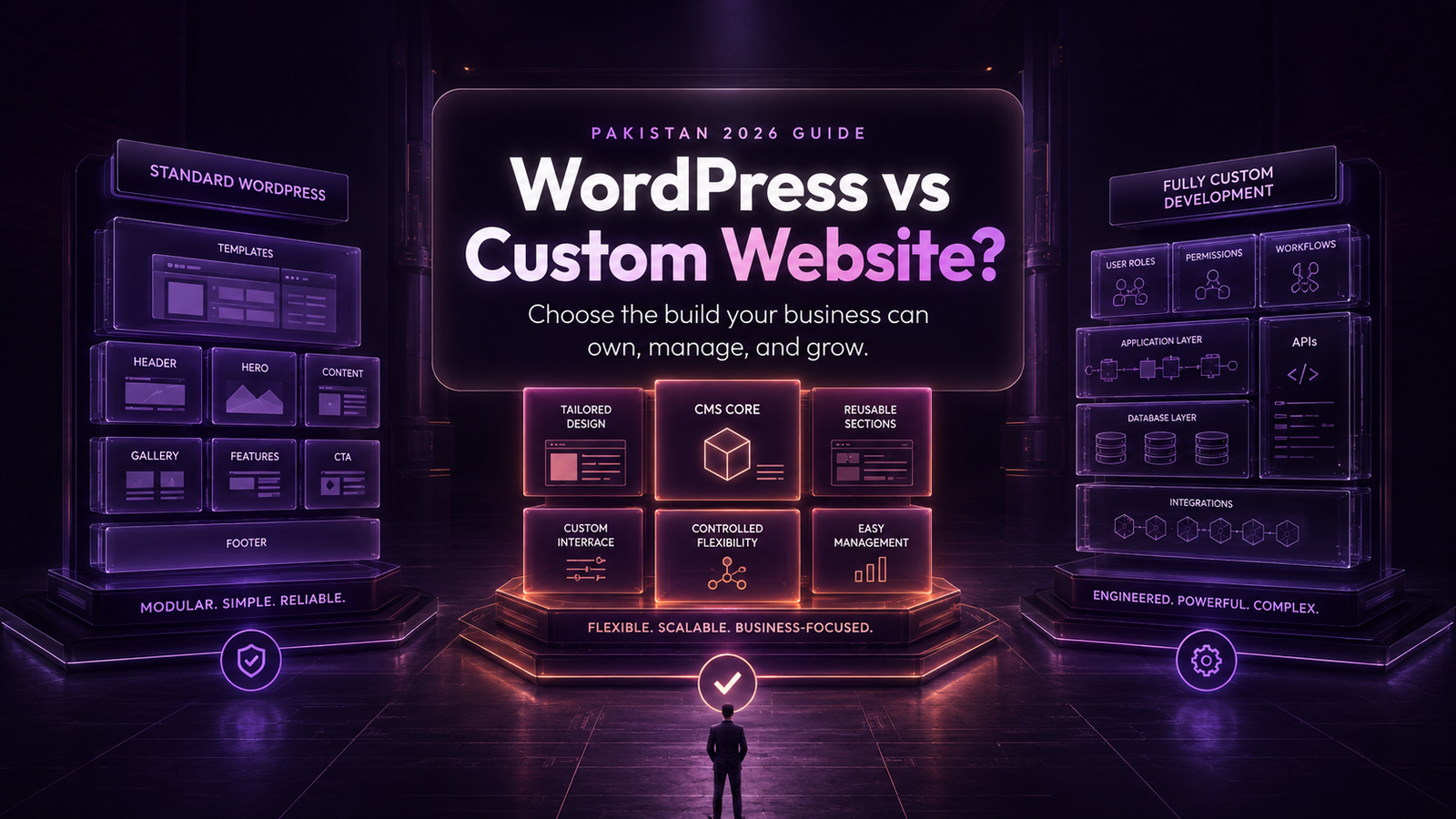
That difference isn’t accidental. It’s the difference between a template… and Custom Website Development.
And if you’re building a brand that actually wants attention, trust, and conversions, this difference matters more than most people realize.
Key Takeaways
- Custom Website Development creates unique, story-driven experiences, not cookie-cutter pages
- Templates limit growth, performance, and branding flexibility
- Custom sites are built for scalability, speed, and user experience
- The right design doesn’t just look better, it converts better
What Is Custom Website Development (and Why Does It Feel Different)?
Custom Website Development is the process of building a website from scratch, designed and coded specifically for a brand’s goals, audience, and functionality.
Unlike templates, nothing is pre-decided. Every element, from UI/UX to performance, is intentional.
That’s why custom sites feel different.
You’ve probably noticed it without realizing:
- Backgrounds that tell a story
- Layouts that guide your attention
- Subtle animations that keep you engaged
These aren’t random design choices. They’re strategic.
The Real Problem with Template Websites
Templates promise speed. And yes, they deliver that.
But they also quietly introduce limitations that show up later:
- Your design looks like hundreds of other websites
- Performance is bloated with unnecessary code
- Customization becomes harder over time
- Your brand identity gets diluted
It’s like renting a space you can decorate… but never truly own.
Why Custom Website Development Wins (The 4-Layer Advantage)
Here’s where things get interesting.
Custom websites aren’t just “better-looking.” They operate on a completely different level.
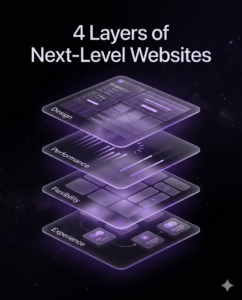
1. Design That Tells a Story
A custom site isn’t just designed, it’s directed.
Like the example in your source: a simple video background instantly transforms a design from “flat” to immersive. That’s not decoration, it’s storytelling.
2. Performance That Feels Instant
Custom coding removes unnecessary weight. Faster load times. Better Core Web Vitals. Smoother interactions.
A site that loads in 1 second has a conversion rate 3x higher than a site that loads in 5 seconds.
That’s not design, that’s revenue.
3. Flexibility Without Limits
Need a custom feature? Unique layout? Advanced functionality?
Templates resist change. Custom builds adapt.
4. Experience That Converts
Good design looks nice.
Great design guides behavior.
Custom websites are built around how users think, scroll, and act.
Mid-Comparison: Custom vs Template
| Feature | Custom Website Development | Template Websites |
| Design | Fully unique | Pre-designed |
| Performance | Optimized code | Often bloated |
| Scalability | High | Limited |
| Branding | Strong identity | Generic feel |
| UX/UI | Tailored experience | Standard layouts |
How Custom Websites Are Built (Simplified Process)
Here’s a clean breakdown of how professional custom website development works:
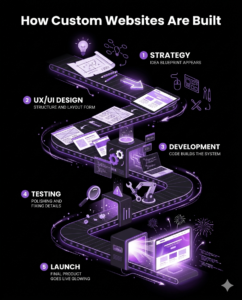
- Strategy & planning (goals, audience, structure)
- UX/UI design (layouts, interactions)
- Development (front-end + back-end technologies like React, Node.js)
- Testing (speed, responsiveness, bugs)
- Launch & optimization
What Most People Get Wrong
Mistake: Choosing templates to “save money”
Reality: You pay later in redesigns, limitations, and lost conversions
Mistake: Thinking design is just visuals
Reality: It’s behavior, psychology, and flow
Do this, not that:
- Do: invest in structure + UX
- Not: rely only on visuals
- Do: think long-term scalability
- Not: choose short-term convenience
A Familiar Real-World Scenario
A growing startup launches with a template.
At first, everything seems fine. But as traffic grows:
- Pages slow down
- Design feels outdated
- Features don’t scale
Eventually, they rebuild everything.
Now imagine starting with a custom foundation instead.
You don’t rebuild, you evolve.
Why This Matters More Than Ever
As more businesses go online, design sameness becomes the norm.
That’s the real risk.
Not just looking “bad”, but looking forgettable.
“Design is not just what it looks like and feels like. Design is how it works.” – Steve Jobs
Custom Website Development doesn’t just improve your website.
It changes how people experience your brand.
Conclusion
A template gets you online.
A custom website gets you remembered.
If your goal is to stand out, scale, and convert, custom website development isn’t a luxury. It’s the foundation.
Because in a world full of similar websites, the one that feels different… wins.