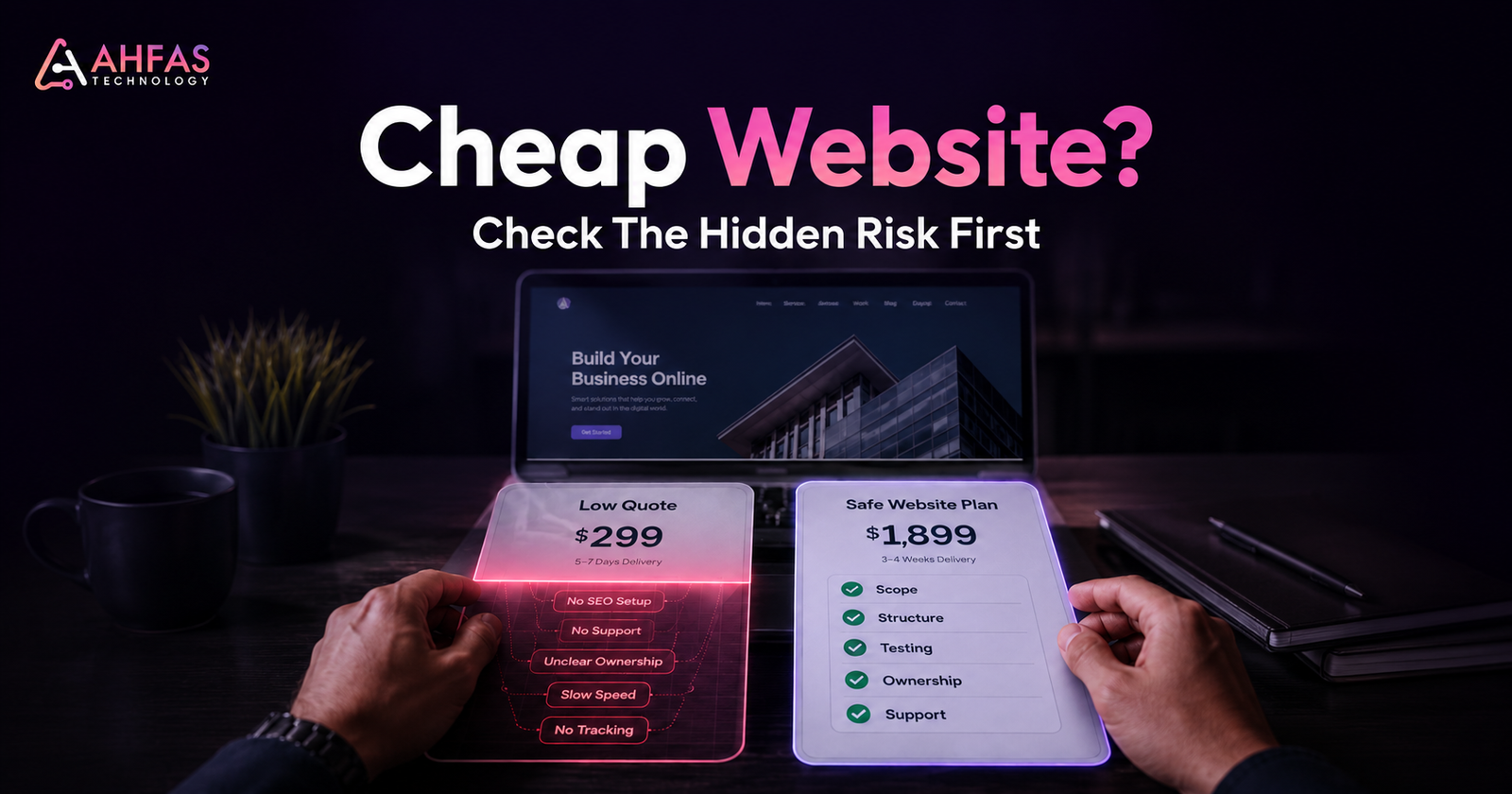
Your website is delayed.
The developer is replying late.
The homepage looks fine, but the phone is not ringing.
The quote was cheap, but now every small fix feels like a new problem.
That is where the freelancer vs web development agency decision becomes serious. A freelancer can be the right choice for a simple, low-risk website with a clear brief. A web development agency is usually safer when the website affects leads, trust, SEO, speed, security, ecommerce, tracking, and long-term support.
The real question is not “Who is cheaper?”
The real question is: What will it cost if the website fails after launch?
Key Takeaways
- Choose a freelancer for small, clear, low-risk website tasks.
- Choose an agency when the website needs strategy, SEO, UX, testing, and support.
- Cheap website development can become expensive when ownership, speed, or maintenance is unclear.
- The safest choice depends on project risk, not just price.
The Real Problem Is Not Freelancer vs Agency
Most business owners think they are hiring someone to “make a website.”
That thinking is already too small.
A business website is not a digital brochure anymore. It is a trust filter. Before someone calls, visits, books, buys, or sends a WhatsApp message, they quietly judge the business through the website.
They ask:
- Does this business look real?
- Is the service clear?
- Can I trust them?
- Is the page fast on mobile?
- Do they explain what I need?
- Is it easy to contact them?
- Do they look better than the next option?
If the answer feels unclear, the visitor leaves.
So the safer hiring choice is not always the cheapest developer or the biggest agency. It is the provider who can reduce the most business risk.
For many Karachi and Pakistan-based businesses, that risk is not only design. It is unclear service pages, weak CTAs, poor SEO setup, no tracking, slow mobile speed, missing proof, and no support after launch.
That is why website development services should never be judged by visuals alone.
Freelancer vs Web Development Agency: The Direct Answer
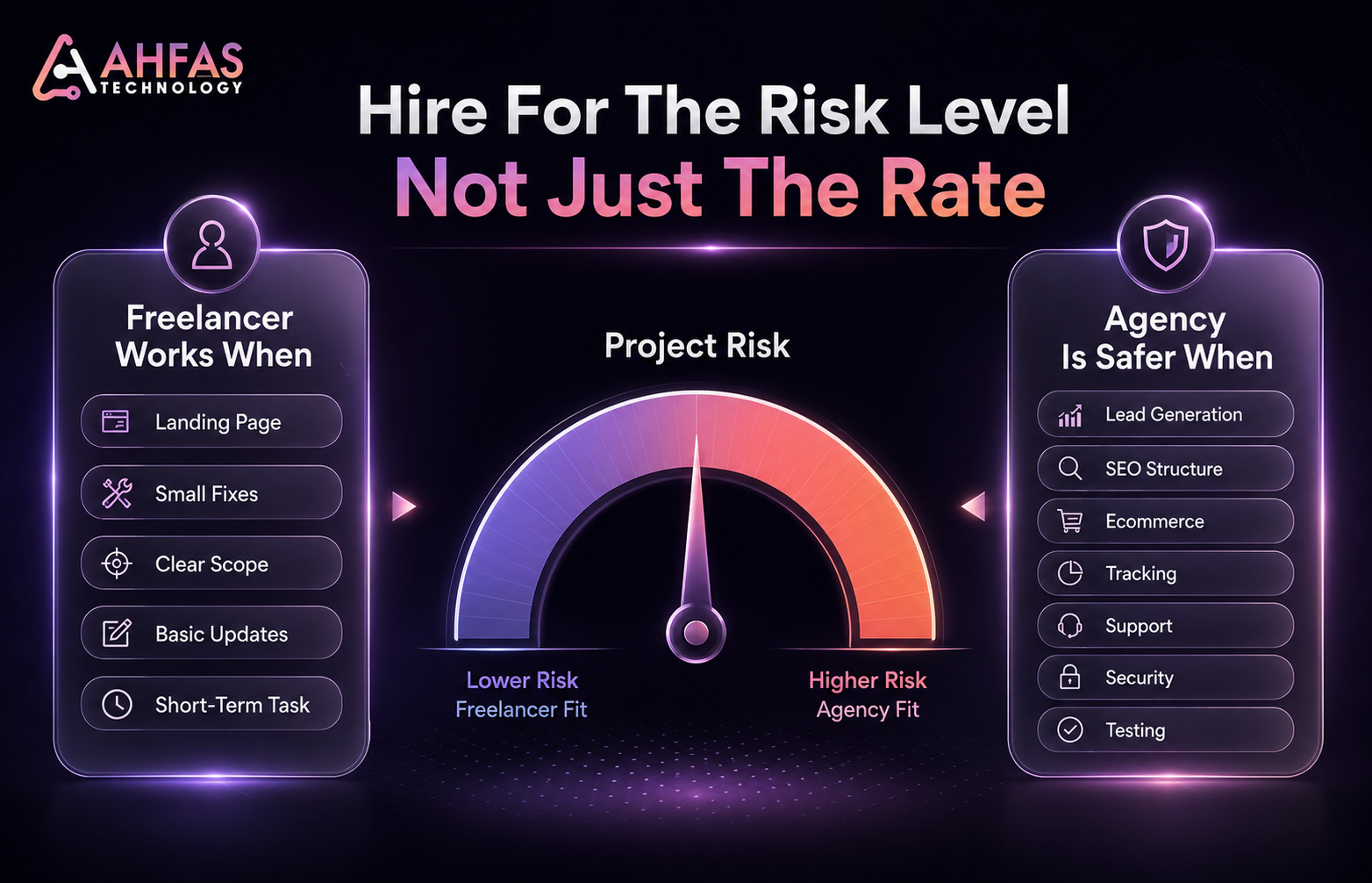
A freelancer usually works best when the job is narrow, simple, and well defined. A web development agency usually works best when the website needs planning, multiple skills, quality control, SEO structure, conversion thinking, testing, and support after launch.
Here is the cleanest way to think about it:
Hire for the risk level, not the rate.
If a small landing page goes wrong, the damage may be limited. If a business website, ecommerce store, or service site goes wrong, the damage can affect leads, sales, trust, search visibility, and future marketing.
That is where the decision changes.
What Does a Freelance Web Developer Usually Offer?
A freelance web developer is usually one person handling the project directly.
That can be useful.
The communication is often direct. The price may be lower. The process may feel more personal. A strong freelancer can build a good site when the business already knows what it needs.
A freelancer can be a smart choice for:
- A Basic Landing Page
- A Small Portfolio Site
- Simple WordPress Edits
- Plugin Fixes
- Small Design Changes
- Basic Website Updates
- One-Time Technical Tasks
- A Clear Short-Term Project
The key word is clear.
If the business already has the content, page structure, brand direction, offer, images, and CTA ready, a freelancer may simply need to execute.
But if the business says, “We need a website that brings leads, but we are not sure what pages, content, structure, SEO, or layout we need,” that is no longer just a build. That is diagnosis, strategy, design, content, SEO, and conversion planning.
One person may still handle it, but the risk becomes higher.
What Does a Web Development Agency Usually Offer?
A web development agency usually brings a team or a structured process.
That may include strategy, UI design, UX planning, frontend development, backend development, content placement, technical SEO setup, QA testing, analytics setup, and post-launch support.
A professional agency is usually safer when the project includes:
- Business Website Development
- Custom Website Development
- E-commerce Website Development
- Website Redesign
- Multiple Service Pages
- SEO-Ready Structure
- Website Security And Performance
- Tracking And Analytics
- Ongoing Updates
- Content And Branding Alignment
Google’s SEO Starter Guide explains that SEO can have a noticeable impact and helps search engines find, crawl, index, and understand pages. That means the website build affects future SEO from day one. It is not something to “add later” after the structure is already weak.
This is where a web development agency in Karachi should act less like a vendor and more like a diagnostic partner.
The Website Safety Test
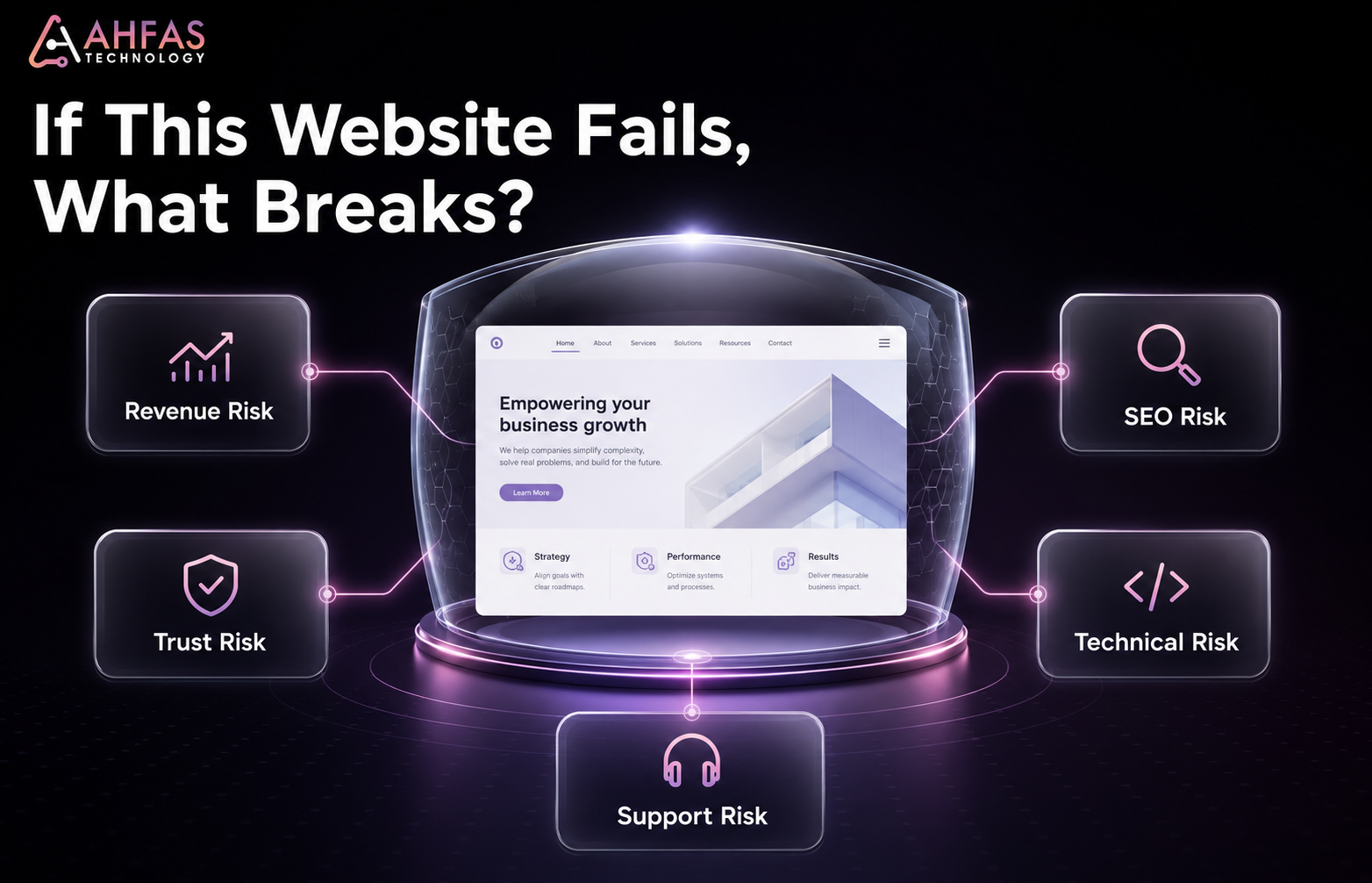
Before choosing a freelancer or agency, ask one question:
If this website fails, what breaks?
If only a small design update fails, the risk is low.
If leads stop, ad spend is wasted, customers lose trust, Google cannot understand the pages, checkout breaks, forms do not work, or the owner cannot access the site, the risk is high.
Use this simple test:
- Revenue risk: Will this website affect leads or sales?
- Trust risk: Will customers judge the business through this site?
- SEO risk: Does the site need to rank on Google?
- Technical risk: Are there integrations, payments, forms, or custom features?
- Support risk: Will the business need help after launch?
If the answer is yes to three or more, the agency route is usually safer.
Freelancer vs Agency for Website Development: A Better Comparison
| Decision Area | Freelancer | Web Development Agency | What to Check First |
| Upfront cost | Usually lower | Usually higher | What is included in the price? |
| Scope control | Good for clear tasks | Better for larger projects | Is the brief detailed? |
| Design quality | Depends on one person | Usually reviewed by more than one role | Is UX included or only visuals? |
| SEO setup | May be limited | Usually more structured | Are pages built for crawlability? |
| Project management | Direct but informal | More structured | Are milestones clear? |
| Testing | May be basic | Usually more complete | Is QA included before launch? |
| Support | Depends on availability | Usually more reliable | What happens after launch? |
| Ownership | Can be unclear | Should be documented | Who owns hosting, files, and access? |
This is why the “freelance web developer vs agency” debate should not be reduced to price. A cheap quote with unclear deliverables is not a bargain. It is a blind spot.
When Hiring a Freelancer Makes Sense
A freelancer is a good fit when the business needs execution, not diagnosis.
Choose a freelancer when:
- The Project Is Small
- The Scope Is Clear
- The Budget Is Limited
- The Website Does Not Carry Heavy Lead Pressure
- The Owner Can Review Quality Internally
- The Content Is Already Prepared
- The Business Does Not Need Long-Term Support
For example, a freelancer may be perfect for fixing a broken section, creating a simple landing page, updating a WordPress theme, or building a clean portfolio site.
There is nothing wrong with that.
The problem starts when a business expects one person to act as strategist, designer, developer, SEO specialist, copywriter, QA tester, security checker, analytics expert, and support team.
That is not always realistic.
When Hiring an Agency Is Safer
An agency is safer when the website is tied to growth.
Choose an agency when:
- The Website Must Generate Leads
- The Site Needs Multiple Service Pages
- SEO Structure Matters
- Content Needs To Persuade Visitors
- Ecommerce Is Involved
- Speed And Security Matter
- Tracking Must Be Accurate
- The Project Needs Long-Term Support
- The Business Needs A Proper Digital Growth Plan
This is especially important for local service businesses, clinics, consultants, real estate businesses, restaurants, ecommerce stores, and home service companies.
For these businesses, a website is not a decoration. It is part of the sales journey.
A visitor may compare three businesses in five minutes. The one with clearer services, stronger proof, faster pages, and easier contact usually feels safer.
That is the whole game.
Freelancer vs Agency Cost: The Cheap Quote Trap
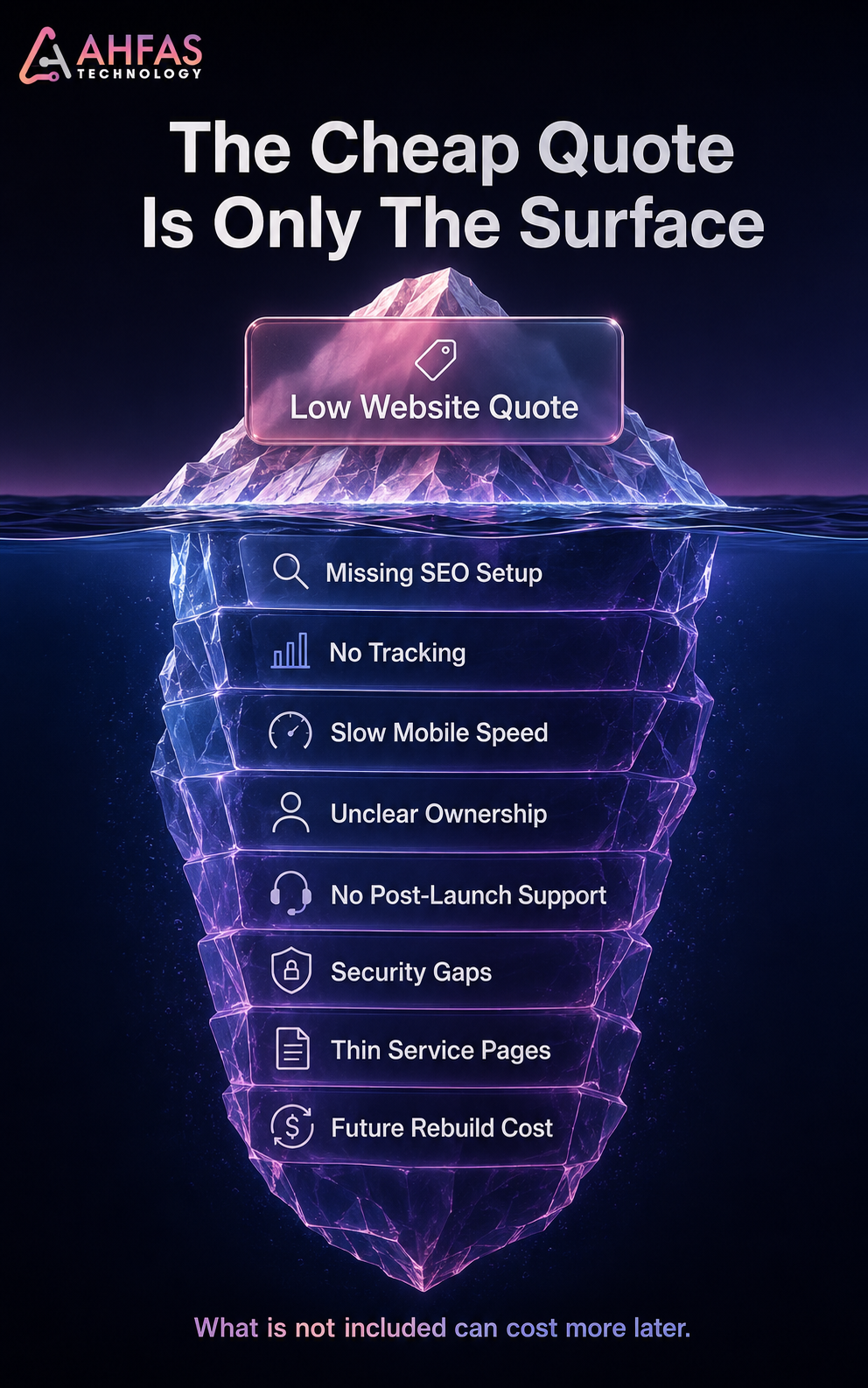
A freelancer may charge less because there are fewer overheads.
An agency may charge more because more work is included.
But the correct comparison is not:
“Which quote is lower?”
It is:
“Which quote protects the business better?”
Before paying, check whether the quote includes:
- Discovery And Planning
- Sitemap
- Service Page Structure
- Wireframes
- Ui And Ux Design
- Responsive Mobile Layout
- Content Placement
- Technical Seo Setup
- Page Speed Checks
- Basic Security Setup
- Form Testing
- Google Analytics 4 Setup
- Google Search Console Setup
- Backup Setup
- Post-Launch Support
- Ownership Handover
If these are missing, the cheap quote may only cover the visible part of the website.
That is dangerous because the invisible parts often decide whether the website performs.
As Benjamin Franklin is widely quoted: “The bitterness of poor quality remains long after the sweetness of low price is forgotten.”
That line fits website development painfully well.
The Hidden Risk: Ownership and Access
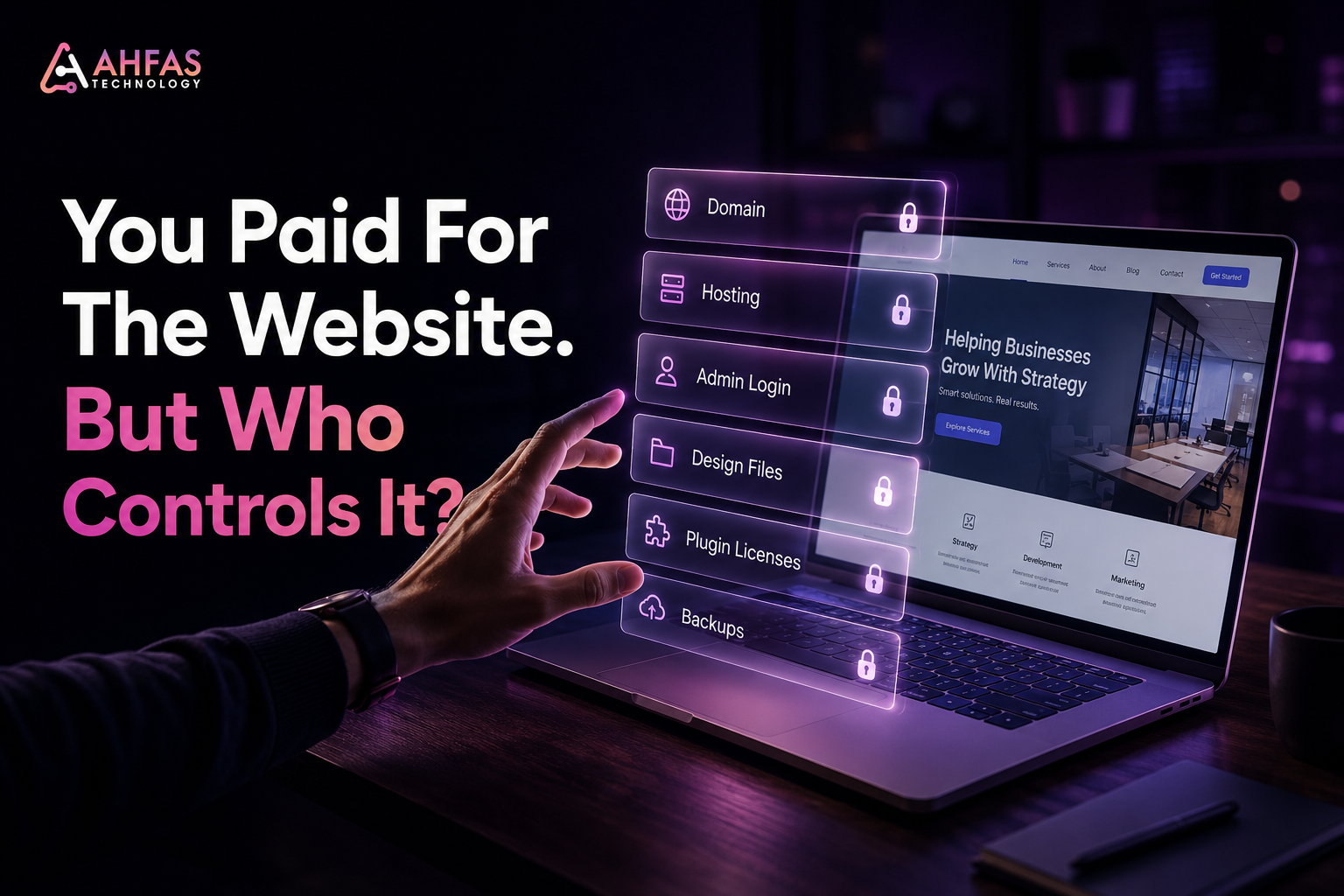
This is where many businesses get trapped.
The website is launched, but nobody knows who controls the domain. The hosting is in the developer’s account. The admin login is shared through WhatsApp. The design files are missing. The plugins are licensed under someone else’s email. The business cannot move the site without asking for permission.
That is not a website. That is dependency.
Before hiring a freelancer or agency, confirm:
- Who owns the domain?
- Who controls the hosting?
- Who has admin access?
- Are design files included?
- Are licenses registered to the business?
- Are backups included?
- Can another developer take over later?
- Will there be documentation after launch?
A serious provider will not hide these answers.
If the answers feel vague, pause.
SEO, Speed, and Security Are Not “Later Problems”
A website can look polished and still be weak.
It can have a beautiful homepage but no search structure.
It can have nice animations but poor mobile speed.
It can have service pages but no clear internal linking.
It can have a contact form, but no tracking.
It can have a checkout, but weak security planning.
Google’s Core Web Vitals documentation describes Core Web Vitals as metrics that measure real-world user experience. Google Search Console’s Core Web Vitals report groups URL performance by status and is based on real user data, including LCP, INP, and CLS.
That means performance is not a design extra. It is part of how real users experience the site.
Security also deserves attention. A 2026 academic survey reviewed 132 free web application security tutorials and found that many emphasized high-level explanations, while fewer provided complete implementation guidance or direct links to authoritative resources such as OWASP, CWE, or CVE. Source: arXiv 2026
The lesson for business owners is simple: do not assume every website builder handles security properly. Ask what is included.
What Most Businesses Get Wrong
Many business owners approve a website based on how the homepage looks.
That is a weak test.
A better test is:
- Can a visitor understand the service in five seconds?
- Is the CTA visible without hunting?
- Does the page explain why the business is trustworthy?
- Are the service pages deep enough to support SEO?
- Does the site load well on mobile?
- Are forms, calls, and WhatsApp clicks tracked?
- Can the business edit basic content later?
- Is there a plan for bugs and updates?
A website that only looks good can still fail quietly.
A safer website is clear, fast, searchable, trackable, secure, and easy to improve.
That is the difference between a design project and a business asset.
Do This, Not That Before Hiring
| Do This | Not That |
| Ask for a clear scope | Start with “just make a website” |
| Compare deliverables | Compare only price |
| Confirm ownership | Leave everything in the developer’s account |
| Ask about SEO setup | Add SEO after a weak build |
| Check post-launch support | Assume support is included |
| Ask about testing | Launch and hope nothing breaks |
| Review mobile speed | Judge only desktop design |
| Set tracking early | Wait until leads are missing |
This is where a digital marketing agency in Karachi can help the business look beyond design and identify the real blocker before spending more.
A Realistic Scenario Most Owners Recognize
A service business hires a freelancer because the quote is affordable.
The site launches.
At first, everyone is happy.
Then the problems appear one by one. The website is slow. The service pages are thin. The contact form works, but nobody is tracking submissions. The business cannot access hosting. Google Search Console is not connected. The developer says SEO was not included. The owner now needs another person to fix the same website.
The original project was not cheap. It was incomplete.
This does not mean every freelancer is risky. A good freelancer with a clear scope can be excellent.
But if the project needed strategy, SEO, content, UX, technical setup, and support, the business did not need “a cheaper developer.” It needed a better plan.
The 5-Part Website Safety Framework
Before choosing anyone, judge the project through these five parts.
1. SCOPE
What pages, features, content, integrations, and revisions are included?
2. STRUCTURE
Will the website have clear service pages, clean menus, internal links, and SEO-friendly architecture?
3. TRUST
Will the site show proof, process, contact details, reviews, portfolio, and strong calls to action?
4. TECHNICAL HEALTH
Will It Be Mobile-Friendly, Fast, Secure, Trackable, And Easy For Google To Understand?
5. SUPPORT
Who fixes bugs, updates plugins, manages backups, and helps after launch?
If a provider only talks about design and ignores these five areas, the business is not getting a full website plan.
It is getting a surface-level build.
Questions to Ask Before Paying Anyone
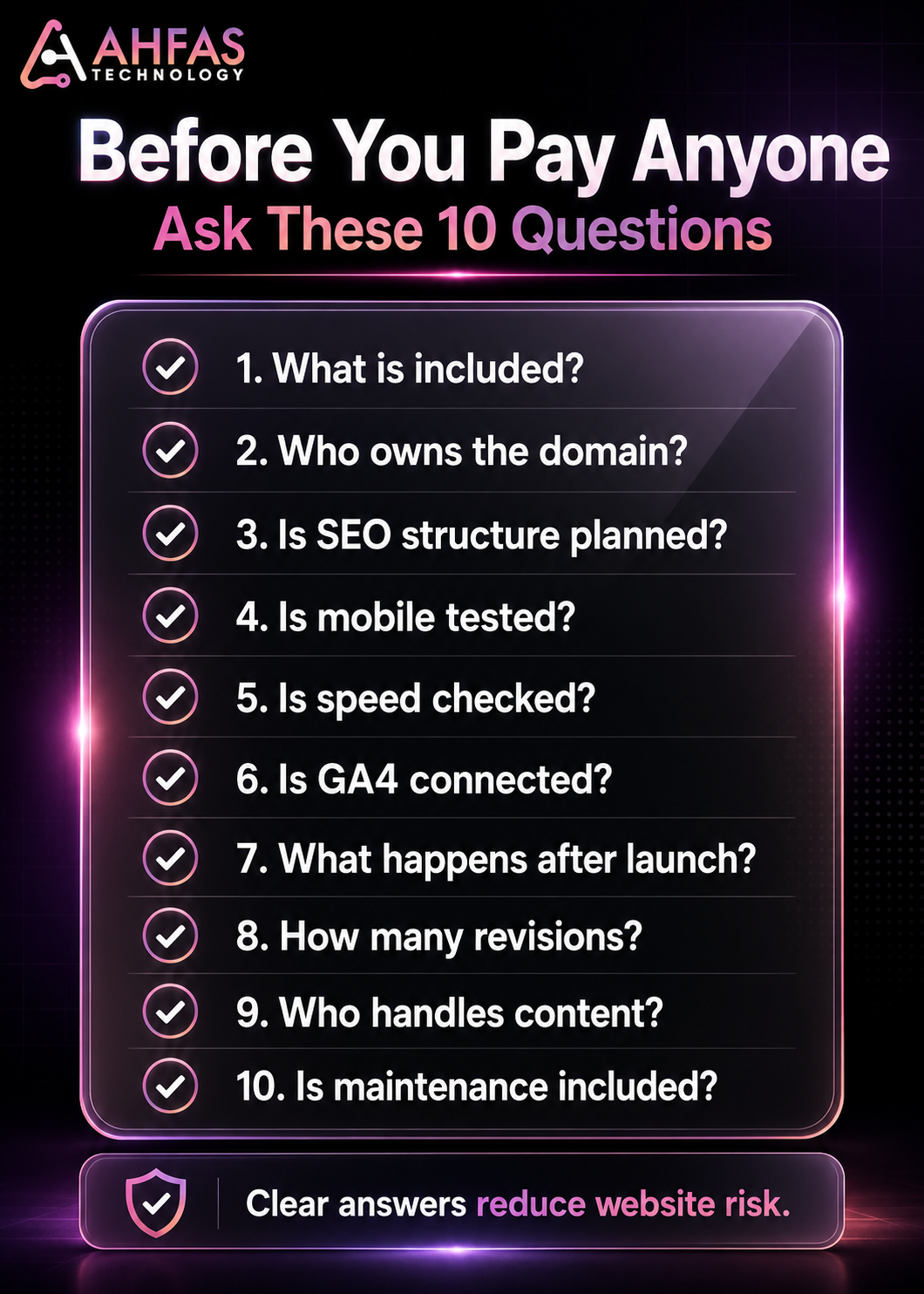
Before hiring a freelancer or web development agency, ask:
- What exactly is included in the project?
- Who owns the domain, hosting, files, and admin access?
- Will service pages be planned for SEO and conversions?
- Will the website be tested on mobile?
- Will page speed be checked?
- Will Google Analytics 4 and Google Search Console be connected?
- What happens if bugs appear after launch?
- How many revisions are included?
- Who writes or places the website content?
- Is maintenance included or separate?
A good provider will answer clearly.
A risky provider will rush the payment.
What Should Be Fixed First?
If the business already has a website, do not rush into a redesign.
Diagnose first.
If the site looks outdated but still brings leads, the first fix may be design and trust.
If the site gets traffic but no inquiries, the first fix may be service page clarity, CTAs, and proof.
If the site looks good but does not rank, the first fix may be technical SEO, content depth, internal links, and page structure.
If ads are running but leads are poor, the first fix may be landing page conversion.
If the business cannot edit or access the site, the first fix is ownership and control.
This is how smart website decisions are made.
Not by guessing. Not by copying competitors. Not by choosing the lowest quote.
Conclusion
The freelancer vs web development agency decision should not start with price. It should start with risk.
A freelancer is a smart choice for small, simple, clearly defined website work. A web development agency is usually safer when the website needs strategy, UX, SEO setup, performance, security, ownership clarity, testing, content support, and long-term improvement.
If the website is only a small task, choose the best person for that task.
If the website affects leads, trust, visibility, or sales, choose the model that protects the business after launch.
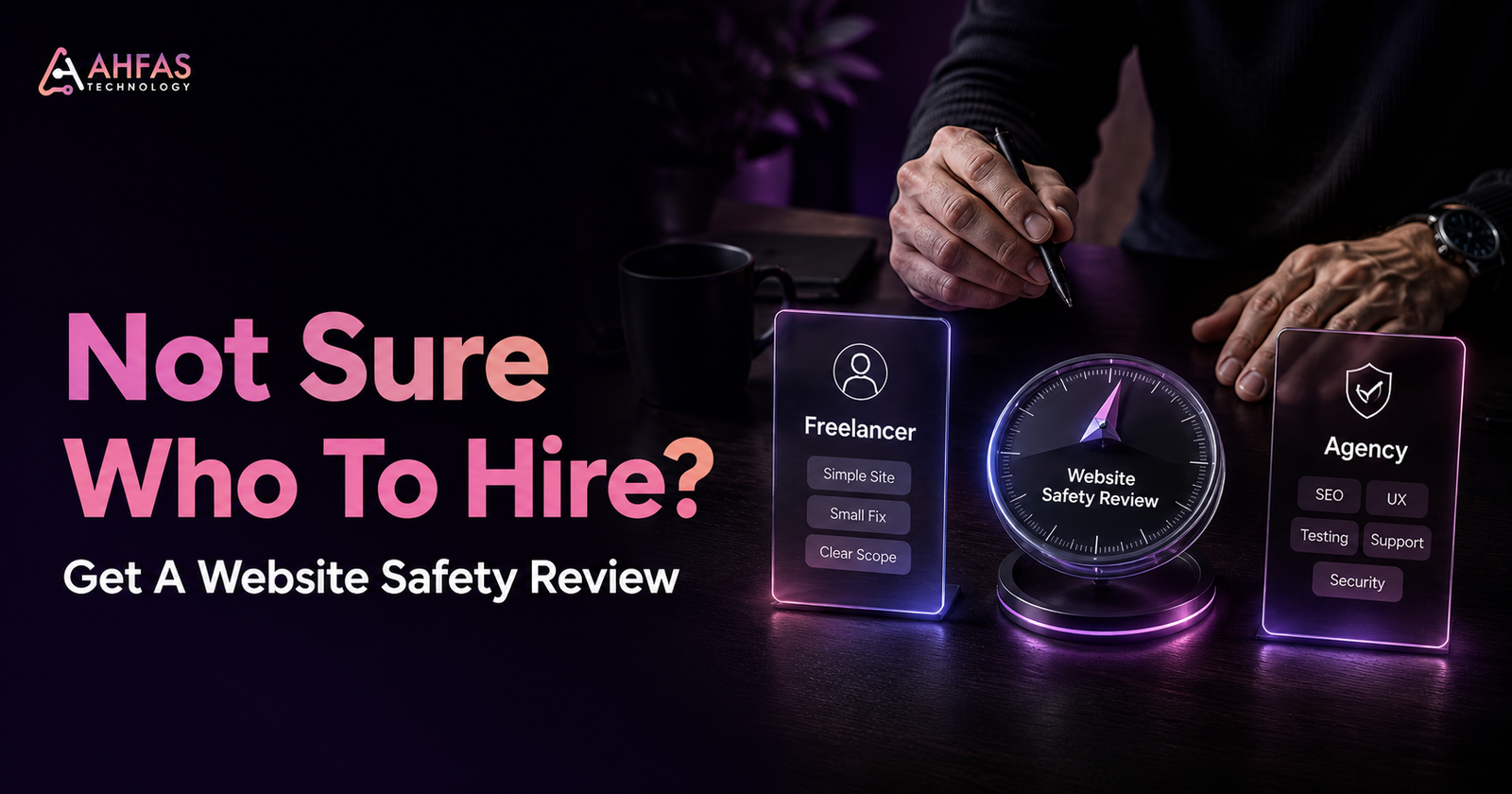
For a practical website review, contact AHFAS Technology at +92-300-9881329 or info@ahfastechnology.com.
Disclaimer: The right choice between a freelancer and a web development agency depends on project scope, budget, timeline, technical requirements, website goals, ownership needs, and long-term support expectations. A freelancer may be enough for a simple website with a clear brief, while an agency is often safer for business-critical websites that need strategy, UX, SEO setup, performance, security, testing, and ongoing support.
FAQs
1. What is the difference between freelancer and web development agency?
A freelancer is usually one person handling the work directly. A web development agency usually has a structured team for strategy, design, development, testing, SEO setup, and support.
2. Freelancer vs web development agency explained simply: which is safer?
A freelancer is safer for small, clear tasks. An agency is safer for business websites that need quality control, technical setup, support, and long-term growth planning.
3. What does a freelance web developer do?
A freelance web developer builds, updates, fixes, or manages websites directly. Some also handle design, CMS setup, basic SEO, and maintenance depending on their skill set.
4. What does a web development agency do?
A web development agency usually plans, designs, develops, tests, launches, and supports websites through a more structured process with multiple skills involved.
5. Freelancer vs agency cost: why is an agency more expensive?
An agency usually costs more because it may include planning, design review, project management, SEO setup, testing, and post-launch support. A freelancer may cost less if the scope is smaller.
6. Freelancer vs agency website quality: who gives better results?
Quality depends on the provider. A skilled freelancer can do strong work, but an agency is usually safer when the project needs several skills and quality checks.
7. Who is better for ecommerce website development?
An agency is usually safer for ecommerce because online stores need checkout setup, payment integration, product structure, tracking, security, testing, and support.
8. What is website maintenance after launch?
Website maintenance includes updates, backups, bug fixes, security checks, speed improvements, and small changes that keep the website working after it goes live.
9. Should a startup hire a freelancer or agency for a website?
A startup can hire a freelancer for a simple first version. It should consider an agency if the website affects sales, investor trust, SEO, or product growth.
10. Can AHFAS Technology help decide the right website option?
Yes. AHFAS Technology can review the website goal, scope, SEO needs, content, branding, and support requirements before recommending the most practical next step.